What is the HOTB Action Plan Standard?
The HOTB Action Plan Standard is a bespoke, end-to-end process that takes your
organisation through all six steps of the UK Menopause Employment Action Plan, with our
HR specialist partners Frank HR Solutions alongside you at every stage.
It is a thorough assessment of where your organisation actually is, followed by tailored
support to get you where you need to be, culminating in independent recognition that your
organisation has done the work.
The Hormones on the Blink Action Plan Standard has been created to help organisations move beyond good intentions and into meaningful, measurable workplace change.
We understand that HR and People teams are navigating an increasingly complex landscape, with evolving workplace expectations, emerging best practice and growing recognition of the impact menopause has on employee wellbeing, retention and gender equality. Alongside everything else on your agenda, knowing where to start, and how to create an action plan that is credible, evidence-informed and achievable, can feel like a lot.
That’s where we come in.
From employee pulse surveys and needs analysis through to manager training, policy development and implementation, we support you to build a menopause action plan that reflects the needs of your workforce, prioritises the actions that will have the greatest impact, and demonstrates your organisation’s commitment to creating a more inclusive & supportive workplace.
“The Hormones on the Blink Action Plan Standard is an exciting opportunity for workplaces that want to take meaningful action. It enables organisations to understand what their workforce actually needs when it comes to menopause support and their wider commitment to gender equality. It’s an ongoing process that allows employers to implement meaningful change, measure the impact of those actions and share their progress publicly. This not only benefits existing employees by creating a more supportive and inclusive workplace, but also helps attract future talent who want to join organisations who’s values match their own.”
Sophie Cartledge, Founder of Hormones on the Blink
Why organisations need support with their Menopause Action Plan
From April 2026, employers with 250+ staff can voluntarily publish an Action Plan alongside their gender pay gap data. From spring 2027, this becomes mandatory and publicly visible to staff, recruits and stakeholders.
There are 18 government-recommended actions to choose from, six specific focus areas for menopause support, and ongoing requirements to track outcomes and review progress at one, two and three years post-submission.
Getting this right, and being able to evidence it, takes more than a policy document. It requires genuine data gathering, employee engagement, cross-referenced legal compliance (Equality Act 2010, Health and Safety at Work Act 1974, Employment Rights Act
2025) and a realistic implementation plan.
Read our full guide: What is the UK Menopause Employment Action Plan?
Who the Action Plan Standard is for
The Hormones on the Blink Action plan standard is for:
● HR, People & Culture, and ED&I leads at organisations with 250+
employees preparing for mandatory reporting (2027)
● Smaller organisations (under 250 employees) who want to get ahead of
employee expectations and attract/retain talent

What’s included – the three phases
Staying on track after your plan is submitted
Once action plans become mandatory, organisations will need to complete an interim progress review one and two years after submission, and a more detailed review at three years. We provide ongoing annual support to help you prepare for each review, so that when the time comes, you have the evidence to show your actions are working and that your commitment is more than just a document.
The HOTB Action Plan Standard
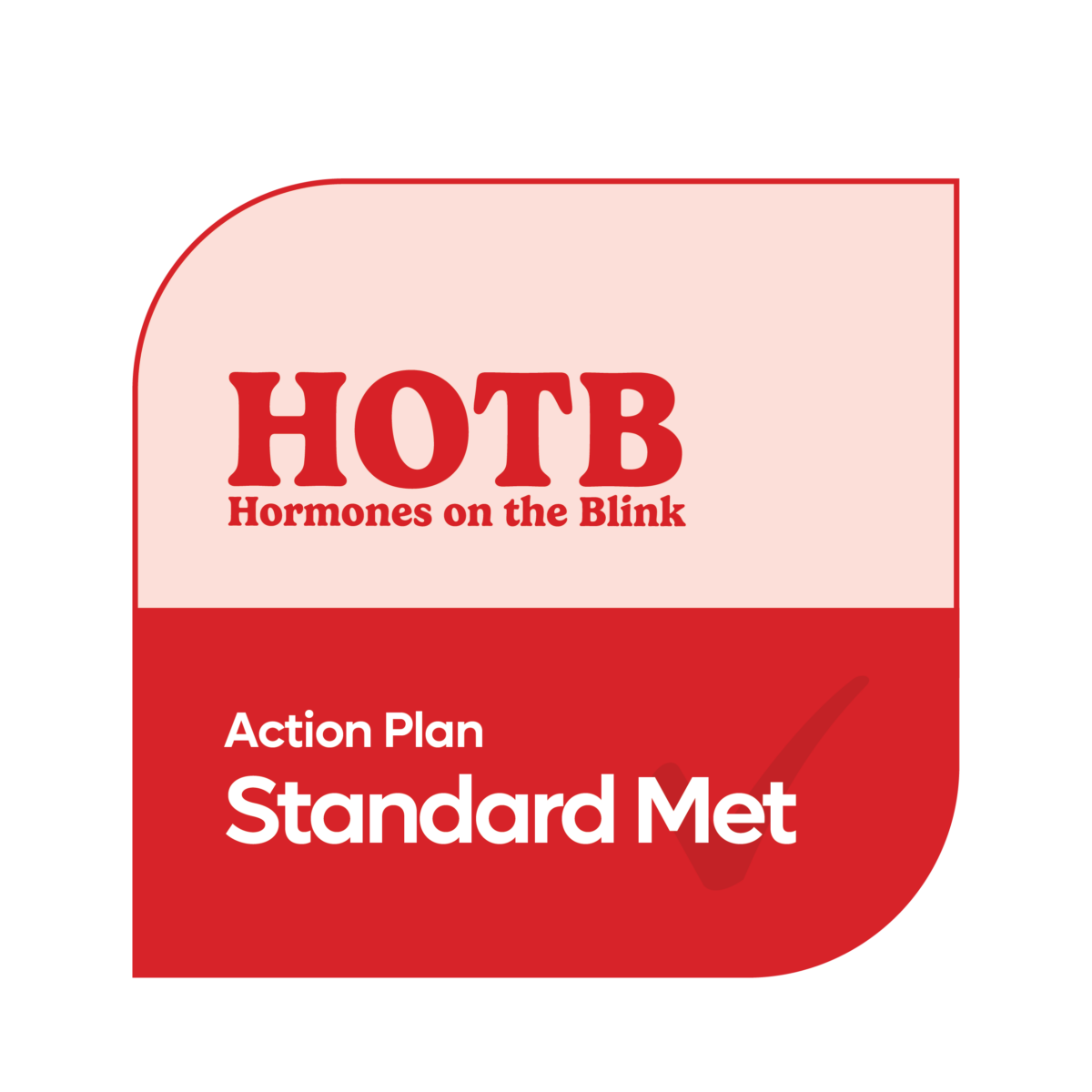
Complete all three phases and your organisation receives the HOTB Action Plan Standard
badge; formal recognition that the work has been done. You can display it with confidence
to staff, stakeholders and prospective employees, and as a recognised partner you’ll be
listed on the HOTB website, visible to the thousands of women and professionals in our
community looking for employers who’ve done the work.
Why choose HOTB for your Menopause Action Plan
Many internal HR departments have already gone through the process of implementing profound changes as a result of the Employment rights act 2025, as well as doing their day job. At Hormones on the Blink we recognise that the Action plan is a large chunk of ongoing work on top and one that crosses several areas of expertise that are not always readily available internally.
At Hormones on the Blink we have worked with businesses of all sizes and bring a deep understanding of menopause & hormone health and awareness of the impact of these to employees and their workplaces. This combined with the expertise of our HR partner Frank HR solutions, that also specialises in menopause means that we are able to get to the heart of what is most impactful, effective & inclusive for the needs of your business.

Get started with your Menopause Action Plan
Book a free 30-minute call to find out how we can support your organisation.